Spades - Card Game
- 4.8
- Rating
- 10.00M
- Installs
- Free
- Price
 Analysis by App-foxy
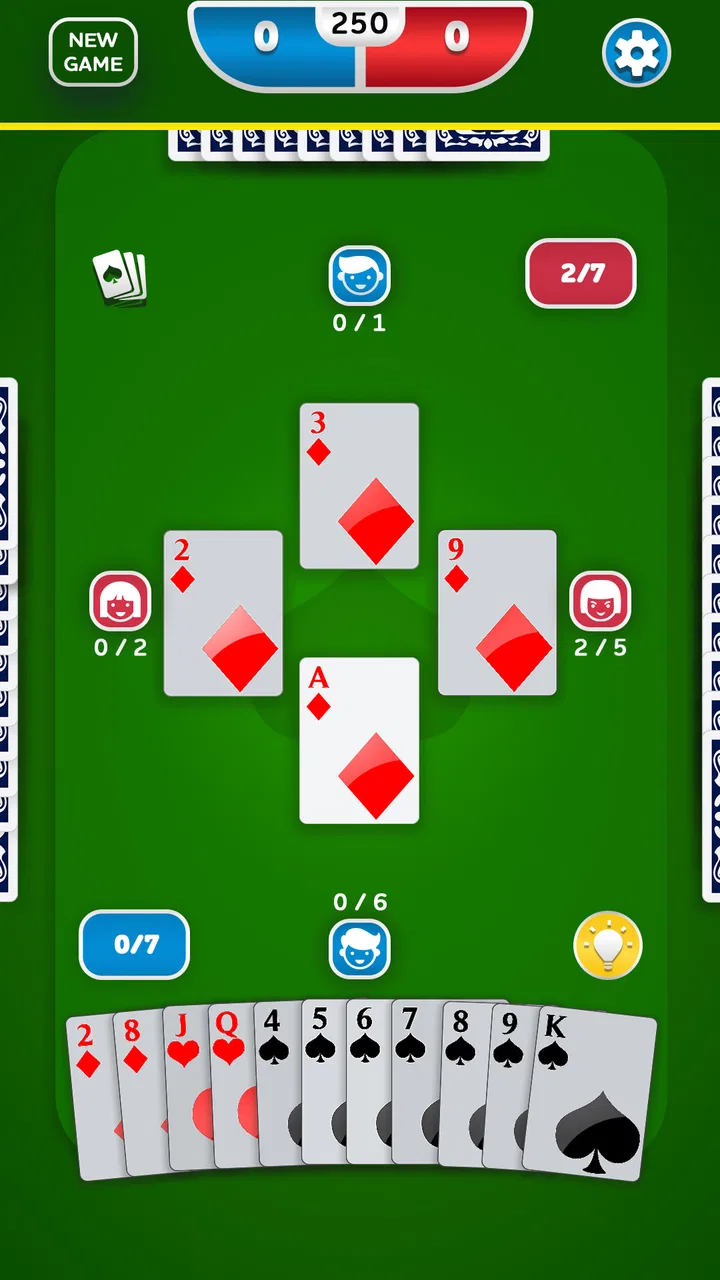
I spent time with Spades - Card Game as a straightforward way to play the classic trick-taking card game on a phone. It is a free card game from Blackout Lab, aimed at anyone who wants a familiar deck-based pastime without carrying cards or finding three other players first. My overall impression is that it succeeds because it keeps the idea easy to understand: start a hand, make your bids, follow suit, and try to collect the number of tricks you predicted.
The appeal is not novelty. It is convenience. This is the kind of game I can open for a short break, play when I have enough time for a few hands, and put away without needing to learn a complicated progression system. The store presents it as a game you can play anywhere and anytime, and that description matches the role it fills well. At the same time, people looking for a deep competitive platform, a large social community, or a demanding strategy experience should approach it with different expectations.
How the game feels in everyday use
The first thing I noticed was how quickly the game gets to the part that matters. Spades is built around decisions rather than elaborate setup, so the experience naturally feels lighter than many modern mobile games. You are not spending the opening minutes managing a character, collecting resources, or working through a long tutorial. The focus is the hand in front of you, which makes it suitable for a commute, a waiting room, or a quiet few minutes at home.
You May Also Like

 Pandora - Music & Podcasts
Pandora’s Music Is Easy to Start, but Harder to Recover
Pandora’s strength is its low-effort path from a seed to a station. Its weak spot is how much confidence it asks you to place in connection, setup, and quiet recovery.

 8 Ball Pool
 Is Built on Rivalries, Rematches, and Routine
A close look at the rivalries, rematches, shared routines, and unanswered safety questions that turn a quick pool match into a persistent mobile community.

 Samsung Music
’s Quiet Strength Is Playing What You Already Own
Its reach comes less from spectacle than from dependable access to a personal library. That simplicity is both the app’s strongest retention engine and its ceiling.

 AccuWeather: Weather Radar
AccuWeather Review: A Quick, Clear Forecast for Everyday Decisions
For everyday plans, the best forecast is the one you can understand quickly. AccuWeather makes rain timing, radar, and local conditions easy to act on, with a few trade-offs.

 Hill Climb Racing
Why Hill Climb Racing Still Turns Crashes Into One More Run
A tiny car, a bumpy hill and one more upgrade: Hill Climb Racing keeps resurfacing because its simple chaos makes every near-miss feel personal.

 AliExpress - Shopping App
AliExpress Makes Global Shopping Feel Personal, but Shoppers Bear the Risk
AliExpress turns a global marketplace into a pocket-sized discovery engine. Its reach is useful, its shopping loop compelling, and its trade-offs easy to miss.
More From Our News Desk
View All News


That quick rhythm is especially useful when I want a game that does not demand full attention for an entire evening. A hand can be treated as a small decision-making session, while a longer play period lets the score develop over several hands. I like that flexibility because it gives the game two practical uses: a brief mental reset and a more sustained card-game session.
The important distinction is that perceived speed here comes from simplicity, not from frantic action. Spades rewards looking at the cards, estimating what you can win, and remembering what has already been played. If you rush every choice, you may finish turns quickly but make poorer bids. The best experience is therefore brisk but thoughtful, with enough time to consider whether a strong-looking hand is genuinely reliable.
Players familiar with the traditional rules will feel at home quickly. Newcomers may need a few hands to understand the relationship between bidding and trick-taking, especially the consequences of overestimating a hand. I would not call the learning curve severe, but it is more than simply matching colors or building runs. The game becomes enjoyable once the basic vocabulary of bids, suits, and tricks stops competing for your attention.
Small sessions work better than forced marathons
One of the strongest everyday uses is the short-session scenario. Imagine waiting for an appointment with your phone already in hand. A quick round of Spades gives you something more engaging than endlessly scrolling, yet it does not require the commitment of a large action game. You can make a few careful decisions, stop when your time is called, and return later when you want another session.
It also works for people who enjoy traditional card games but do not always have a partner or group available. A physical deck is excellent when friends or family are nearby, but it is less convenient when you are alone. This version gives the familiar structure a more accessible format, although it cannot fully reproduce the conversation, bluffing, and shared atmosphere of a table with real people.
For that reason, I see it as a personal card-game companion rather than a complete replacement for social Spades. If your favorite part is negotiating with friends, joking between hands, or reading another human player's reactions, a local deck or a multiplayer-focused alternative will probably be more satisfying. If your priority is being able to play on demand, this app makes a stronger case.
Where the mental workload appears
The game is easy to start but not mindless. The main workload comes from evaluating risk. A hand with several high cards may look powerful, yet the distribution of suits and the possibility of losing control later can change the result. I found that the most useful habit is to separate confidence from excitement: bid according to the tricks you can realistically secure, not simply the cards that look impressive at first glance.
Another practical habit is to watch the table after each trick instead of focusing only on your own hand. Remembering which strong cards have already appeared can make later choices clearer. This is where the app has more lasting value than a purely casual matching game. It gives me a compact exercise in probability, memory, and restraint without turning those skills into a formal lesson.
A useful approach for newer players is to treat early sessions as observation rather than score-chasing. Notice how often a bid succeeds, which suits become dangerous, and how your assumptions change as cards leave play. That mindset reduces frustration and helps the game reveal its strategy gradually. It is also more productive than copying a single rigid rule for every hand.
Stability, device demands, and longer play
Blackout Lab keeps this release in the card-game category, and that matters when considering what a phone needs to do. This is not the sort of title I would choose to stress a device's processor or graphics hardware. The presentation is centered on cards, turns, and readable game information rather than a large animated world. In practical terms, the game feels suited to ordinary mobile play rather than demanding gaming hardware.
The listed minimum operating-system requirement is Android 6.0, which opens the door to older Android devices that cannot run many current games. That does not guarantee identical behavior on every phone, because performance can still vary with available memory, background activity, screen size, and the condition of the device. Still, the requirement makes the game more approachable for people using an older handset as a secondary phone or keeping a device for simple entertainment.
Resource demands are also likely to be easier to manage than with a graphics-heavy game, but I would not treat that as a promise of unlimited battery life or perfect behavior on every model. A long card session still keeps the display active, and an older battery can drain faster during any continuous use. My practical advice is to judge it as a lightweight game, not as an app that should have no effect on battery or memory at all.
During heavier use, the relevant stress is less about visual complexity and more about sustained sessions. Playing several hands in a row means repeated card animations, score updates, and touch input. The experience remains conceptually simple, but a phone with many apps open in the background may feel less responsive than it does after a fresh start. Closing unnecessary apps before a long session is a sensible step, particularly on an older device.
Recovery matters more than raw speed
For a card game, recovery is part of the experience. Nobody wants to lose track of a hand because the phone was briefly interrupted by a call, a notification, or a low-memory slowdown. I found that the best way to use this type of game is to treat each hand as a focused unit and avoid beginning one when I know I may need to leave immediately. That is not a criticism of the title so much as a realistic habit for any turn-based game.
Short, self-contained play also limits the damage of an interruption. If I am only playing a quick session, I am less likely to feel that a pause has ruined a long investment. On the other hand, players who want to leave an extended match running while switching repeatedly between apps should be more cautious. The practical question is not only whether the game opens quickly, but whether its current state remains convenient after the phone has been busy elsewhere.
I would also recommend keeping the operating system and the app itself in a normal, maintained state. The current version is 2.1.3, so anyone installing it should use the current release available for their device rather than relying on an old copy. Updates can matter for compatibility and general reliability, even though I would not assume that every update changes the rules or adds a major new mode.
What happens during extended sessions
Longer play exposes a different kind of limitation: repetition. The core loop is satisfying when I am in the mood to think through hands, but it does not offer the visual variety of a larger game. After several sessions, the appeal depends heavily on whether I enjoy improving my decisions. If I need constant new content, changing environments, or a strong sense of progression, the simple card format may start to feel narrow.
That simplicity can also be a strength for older phones. There are fewer moving parts competing for attention, and the game does not ask the device to render a busy three-dimensional scene. I would choose it over a demanding action title when I want predictable, low-pressure entertainment. I would not choose it as a showcase for a new high-end phone, because its purpose is playability and focus rather than visual ambition.
Screen size affects comfort more than raw performance. On a compact phone, cards and score information may require more careful attention, especially for players with weaker eyesight. A larger display makes the table easier to read and reduces accidental taps, while a smaller device is more portable. This is a trade-off worth considering before installation if you expect to play for long periods.
How it compares with other ways to play Spades
The usual alternative is a physical deck. Cards on a table offer clearer social interaction and make it easier to discuss bids, teach a family member, or create house rules. They also require other people, a flat surface, and enough time to organize a game. The app wins on availability and convenience, but the physical version wins on atmosphere and flexibility.
Another alternative is a more feature-heavy digital card platform. Those games may provide broader collections, more competitive systems, or a stronger emphasis on online interaction. They can be better for players who want a persistent community or many different modes. The trade-off is greater complexity, more distractions, and often a steeper learning curve. I prefer this release when I want Spades itself to remain the center of attention.
Compared with a generic solitaire game, this is a more social-feeling and strategic experience even when played alone against computer-controlled opponents. Solitaire is often better for completely relaxed, low-stakes sorting and planning. Spades asks me to make a prediction about future tricks and then live with that prediction. If you want calm repetition, solitaire may suit you more; if you want decisions shaped by a changing table, Spades has more bite.
Who should install it, and who should skip it
I would recommend it to someone who already knows Spades and wants an accessible mobile version, as well as to a newcomer willing to learn through a few hands. It is also a good fit for people who prefer games that can be played in short bursts, use familiar rules, and do not require powerful hardware. The free price makes trying it low-risk, and the Everyone age rating makes it appropriate for a broad audience.
I would be less enthusiastic for someone who needs a highly social online experience, extensive customization, or a constant stream of new challenges. I would also steer away from it if your idea of a card game is fast matching with almost no planning. The strategic pauses are part of the appeal, but they may feel slow to players who want immediate action every second.
The game's popularity suggests that it has reached a substantial audience: it has passed five million installs, with an average rating of 4.8 from roughly two hundred eighty-three thousand ratings. Those figures do not replace personal testing, but they do indicate that the basic format connects with many players. Blackout Lab has positioned it as an approachable card game rather than an intimidating simulation, and that balance is central to its appeal.
My performance verdict after regular play
My verdict is positive, with a clear understanding of its limits. Spades - Card Game feels best when I want a focused, lightweight card session that starts quickly and does not overwhelm the phone or the player. Its perceived speed comes from a clean, uncomplicated loop, while its real depth comes from bidding carefully and tracking how a hand develops.
The strongest performance advantage is practical: the game belongs to a category that naturally fits mobile devices, and its Android 6.0 minimum makes it accessible to older hardware. I would still leave room for normal differences between phones, especially during long sessions or when many background apps are active. Keeping the device reasonably clear and treating each hand as a manageable session should make the experience more comfortable.
What I value most is the balance between accessibility and judgment. I can recommend it to a friend who wants something more engaging than solitaire but less demanding than a large competitive game. The app gives enough room to improve without requiring a major time commitment. Its weakness is the same as its strength: the focused format may eventually feel repetitive if you need variety, social features, or a broader progression system.
For me, that makes this a dependable choice for traditional card-game fans, casual strategists, and anyone who wants Spades available whenever a spare moment appears. It is free, easy to approach, and modest in its demands. Just install it for the card game itself, not for spectacle. If that sounds like the kind of entertainment you want, this version from Blackout Lab is worth keeping on your phone.
FAQs for Spades - Card Game
01What is the objective of Spades - Card Game?
The primary objective of Spades - Card Game is to accurately bid the number of tricks you can win in each round. Successfully fulfilling your bid earns you points, while failing to meet your bid results in penalties. It's a strategic game that requires players to work in teams to outmaneuver their opponents.
02How is Spades - Card Game different from other card games?
Spades offers a unique blend of strategy and teamwork. Unlike many other card games, it focuses on bidding and trick-taking while requiring players to communicate non-verbally with their partners. The use of the spade suit as always trump adds an interesting twist, making it distinct from games like Hearts or Bridge.
03Can I play Spades - Card Game offline?
Yes, Spades - Card Game can be played offline. This feature is perfect for those who wish to enjoy the game without an internet connection. You can play against computer opponents or practice your skills when you're on the go or in areas with limited connectivity.
04What are some strategies for winning at Spades?
Winning at Spades involves mastering several strategies, such as accurately assessing your hand to make realistic bids, keeping track of cards played, and understanding your partner’s playing style. It's crucial to balance aggressive and conservative plays and to anticipate opponents' moves to gain a competitive edge.
05Is there a way to customize the game settings in Spades - Card Game?
Yes, Spades - Card Game offers various customization options. Players can adjust difficulty levels, choose different card designs, and even select personalized avatars. Such customization options enhance the gaming experience, allowing players to tailor the game to their preferences and skill levels.
Pros
- Intuitive user interface for easy navigation.
- Smooth animations enhance gameplay experience.
- Variety of difficulty levels for all players.
- Multiplayer mode with friends adds fun.
- Offline play available for no interruptions.
Cons
- Ads can be intrusive and disrupt flow.
- Limited customization for card decks.
- Occasional connectivity issues in multiplayer.
- Lacks in-depth tutorials for beginners.
- Frequent updates may use significant data.

Spades - Card Game
Gallery